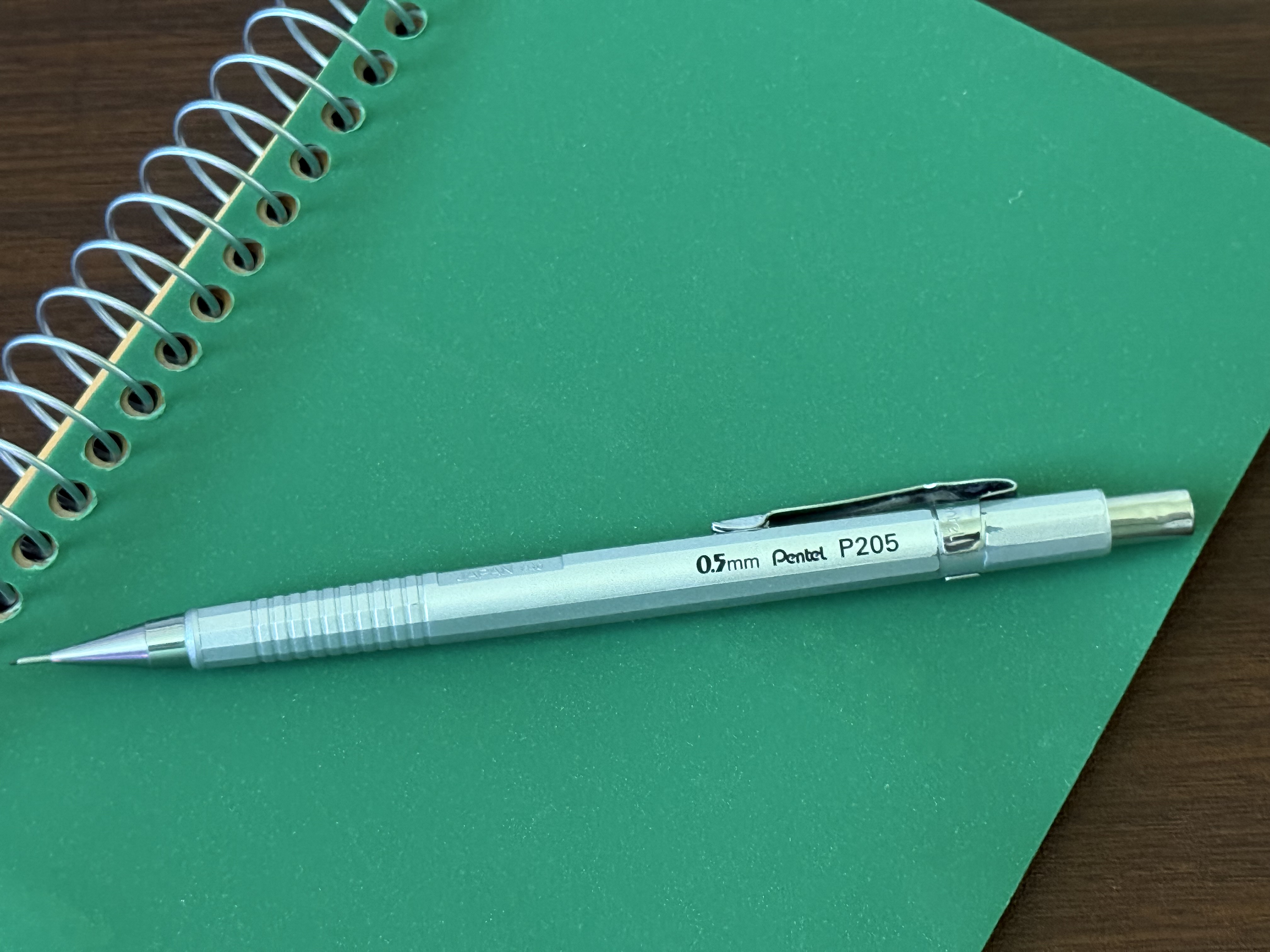
Last week I spent several hours researching mechanical pencils.
I realize that sentence doesn’t make me sound particularly well-adjusted.
The funny part is that I already had a perfectly good mechanical pencil.
I’ve always preferred mechanical pencils to regular ones. I like the consistency of the line. I like not having to sharpen them. I like that they feel a little more precise.
Every now and then someone would ask why. I never had a good answer.
I just liked them.
For years I’ve used the same Pentel P205. It writes well, has never given me a reason to replace it, and I’m fairly certain I acquired it from an office supply closet at some point during my career. Even today, a new P205 costs less than a good cup of coffee.
I’ve carried it through multiple jobs, countless meetings, and more pages than I can remember. It still works exactly as intended.
The Pentel became part of the background. It was one of those tools I used so frequently that I stopped noticing it. It sat through meetings, helped fill notebooks, and survived years of daily use without ever asking for attention.
Which is why I was surprised when I found myself wondering what the enthusiast version of a mechanical pencil looked like.
I wasn’t looking for something expensive or rare. I wanted to know what a mechanical pencil looked like when every little detail had been thought about.
That question led me into a surprisingly deep rabbit hole.
Mechanical pencils have their own enthusiast world. Engineers, architects, designers, and draftsmen have been obsessing over them for decades. Weight distribution matters. Grip design matters. Lead advancement mechanisms matter. Tolerances matter. Materials matter.
The deeper I went, the more one pencil kept appearing: the Rotring 600.
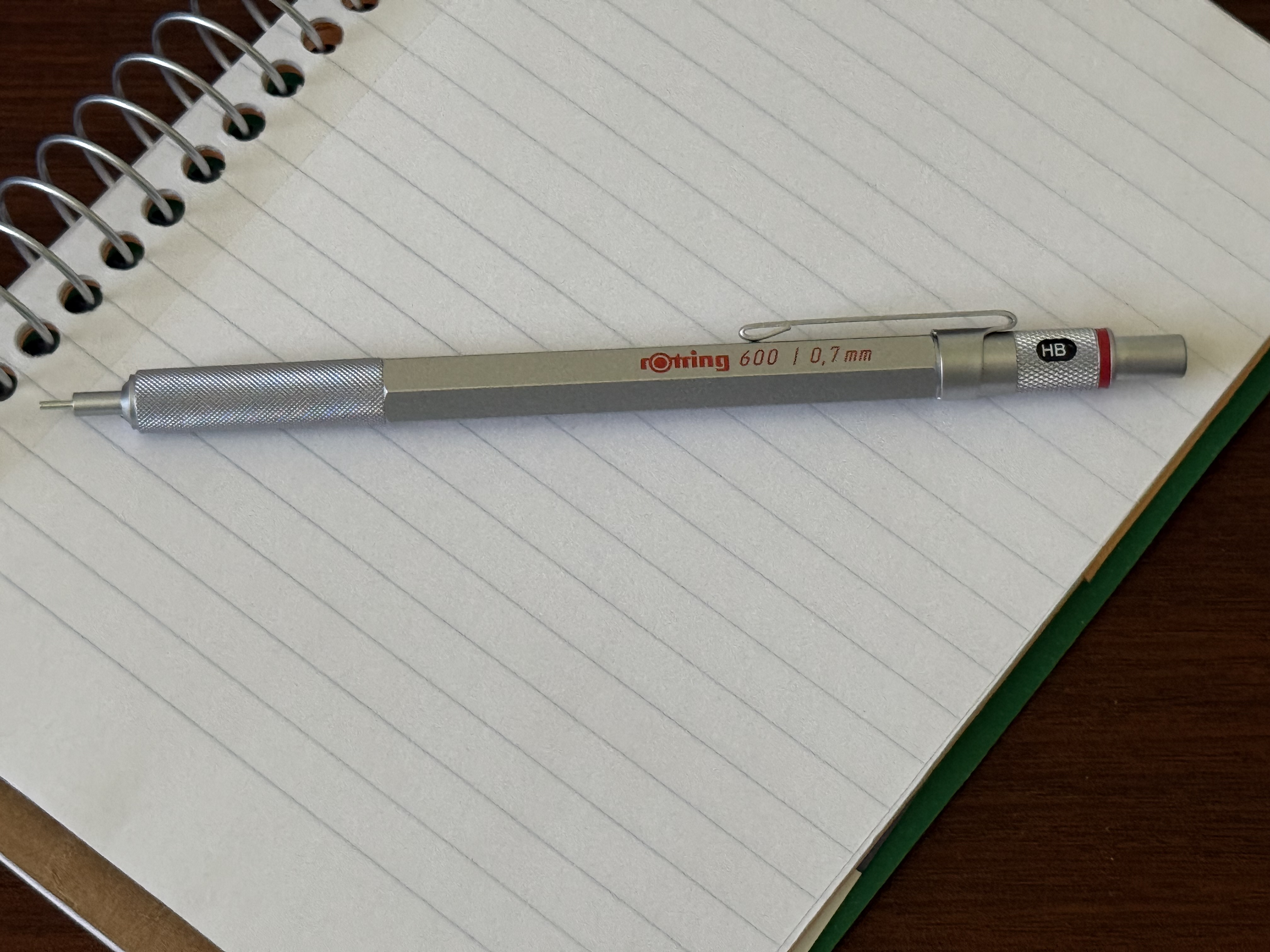
The praise was remarkably consistent. People respected it.
Nobody seemed to think it would change their life or somehow make them better at writing. They just thought it was a really good mechanical pencil.
This morning, a mechanical pencil arrived on my doorstep.
At around $25, I wasn’t expecting much from the packaging. It came in a decent box and looked nice enough sitting inside.
Then I picked it up.
The first thing I noticed was the weight. I’d read about it, but it was immediately more satisfying than I expected. The knurled grip was impossible to ignore.
I spent the next minute or so holding it, turning it over and looking at it from different angles.
And then I had almost the exact same thought my wife had when I told her I’d spent $25 on a mechanical pencil.
It’s just a pencil.
Hmm.
Once the novelty wore off, I still liked the Rotring. The weight felt good in my hand and it wrote smoothly. I could see why people liked it.
What surprised me was how similar it was to the Pentel.
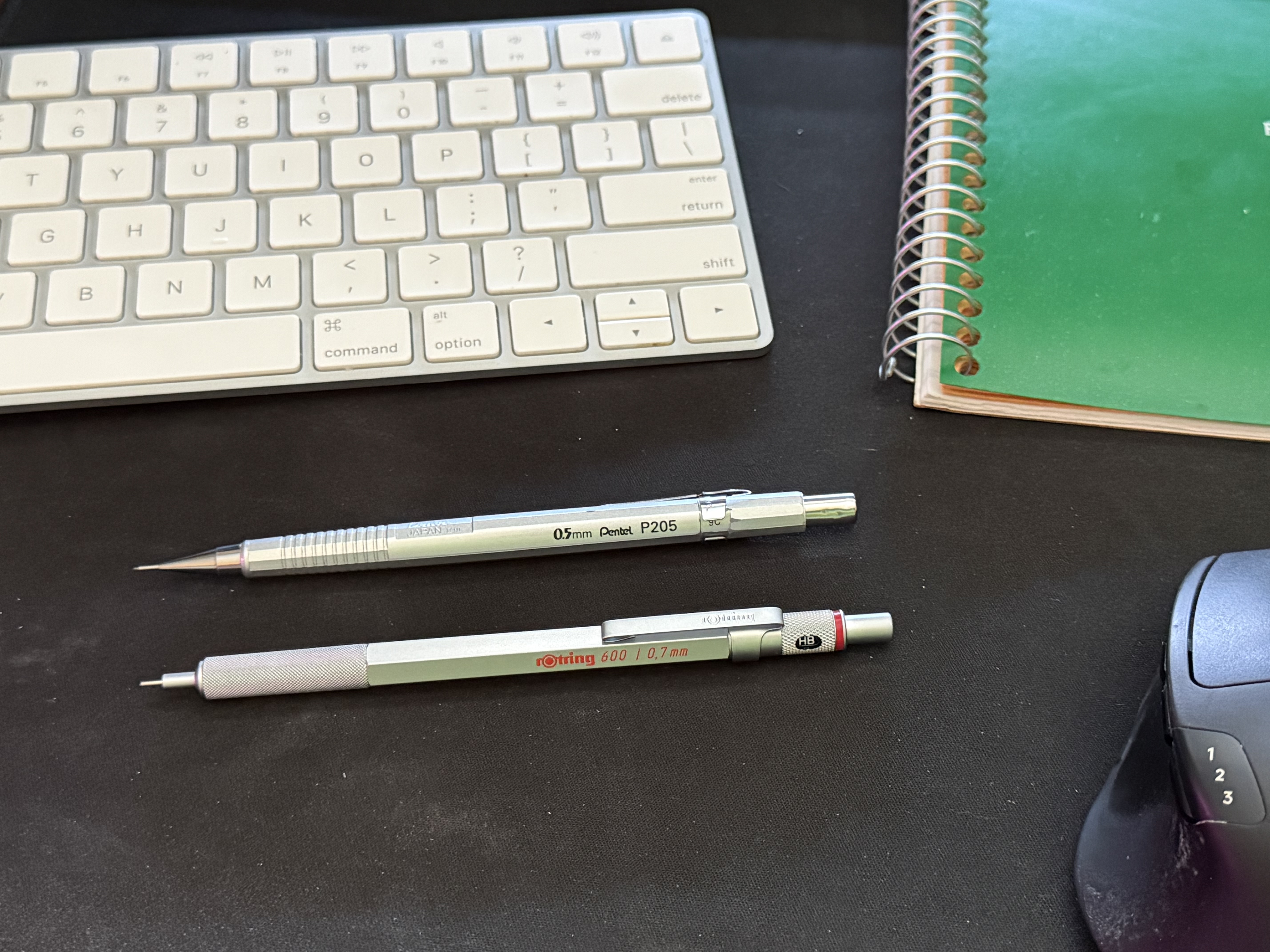
They looked similar. They performed similarly. The Rotring was definitely better. But was it $25 better? That was harder to answer.
The Pentel had already solved the practical problem. The Rotring wasn’t here because the Pentel had fallen short.
I was curious.
The Rotring is better. It has better materials, more refinement and a lot more engineering behind it.
But after using it, I had a renewed appreciation for how much engineering had been sitting on my desk all along.