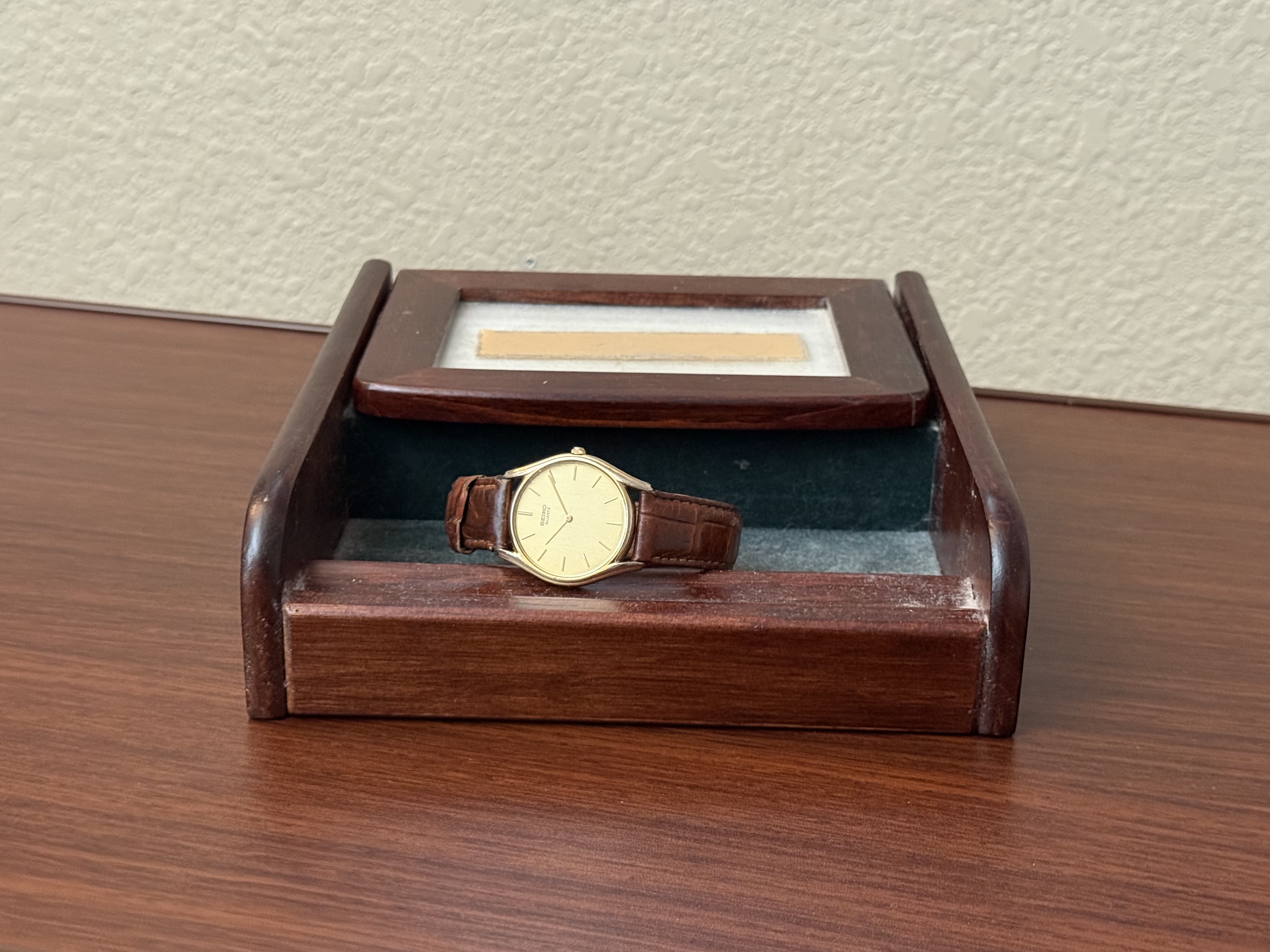
On paper, this is an easy watch to overlook.
It’s a Seiko 2620-0039 from the 1980s. Quartz. Gold-tone. Two hands. There are no precious metals, no mechanical movement, and no collector waiting list. Even among vintage Seikos, it wouldn’t stand out.
There was a time when I would have walked right past it.
Today, I wouldn’t.
As my collection grew, I found myself appreciating the kinds of watches I never would have considered, especially two-hand dress watches.
When I first encountered them, they almost seemed incomplete. Where was the seconds hand? Wasn’t something missing?
Over time, I realized that was the point.
A dress watch doesn’t need to measure every passing second. It’s there to tell the time, disappear under a cuff, and quietly do its job. Removing the seconds hand doesn’t take anything away from that experience. If anything, it makes the dial cleaner and more balanced.
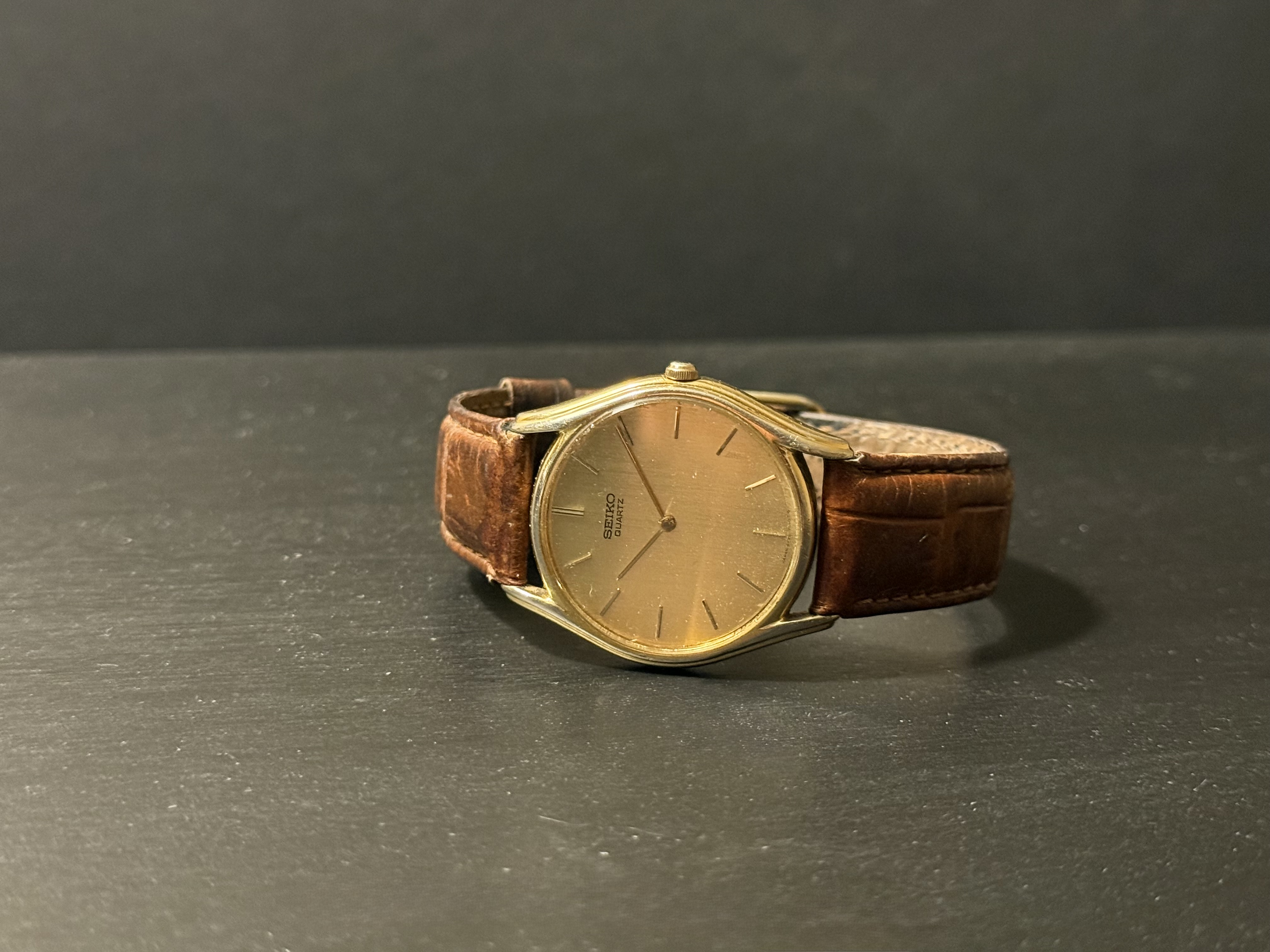
Looking at this Seiko today, I notice things I never would have before. The long hands. The thin markers. The generous amount of open space. More than forty years after it was designed, it still feels balanced and understated.
The more I appreciated that restraint, the more I started recognizing it in people. People who are confident, accomplished, and comfortable letting their character speak for them.
A watch like this fits that philosophy perfectly. It’s simple, well made, and comfortable being exactly what it is.
I’ve spent the last couple of paragraphs describing the kind of person who would choose a watch like this.
I know him well.
He was my father.
My father wasn’t a watch enthusiast. I’ll never know why he chose this Seiko. Maybe he compared it to another watch in the display case. Maybe he simply liked the way it looked on his wrist. I doubt he ever thought about the symmetry of a two-hand dial or whether I would someday appreciate its restraint.
He bought a watch because he needed a watch. Then he wore it for the next twenty years of his life.
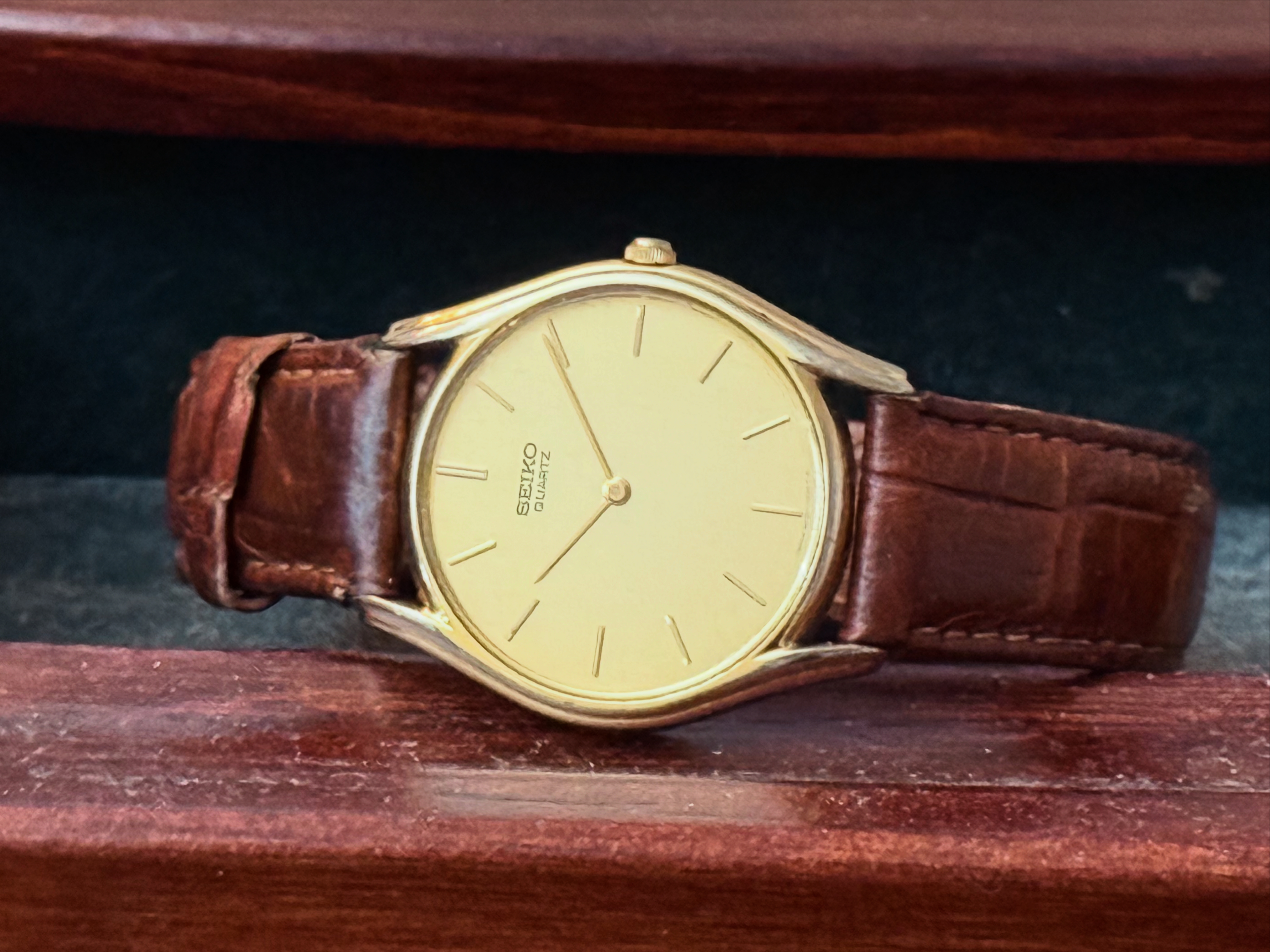
He wore it to work, but he always made it to my games. Some he coached. Others he watched from the stands, cheering just as loudly. He wore it to dinner with the family, to school fundraisers, and on family trips.
It wasn’t his “dress watch.” It was simply his watch.
Twenty-five years ago, it was also the watch he was wearing when he passed away.
When I was younger, I thought that was why this watch mattered. Twenty-five years later, I think the opposite.
What matters is everything that came before. All the regular days in between.
If there was one thing my father believed, it was that family came first. If you asked the people who knew him best, they wouldn’t start with his career. They’d tell you he was always there.
For the games.
For dinner.
For family trips.
For the countless ordinary moments where he chose to be present.
Twenty-five years later, I still open the box.
I see the watch and I remember my dad. I remember him leaving for work in the morning. I remember him at my games. I remember family dinners.
I remember all the ordinary moments that never felt important at the time.
That’s what I see when I look at this watch now.
Not a vintage Seiko.
My dad.
The watches we remember aren’t always the ones that impressed people.
They’re the ones that were there.